How to Help Your Child Get Set Up For Success In Handwriting
Getting Set Up For Success
While your child is learning the letters of the alphabet and their sounds, they should also begin forming good habits in handwriting. Getting the fundamentals of penmanship correct (posture, pencil grip, and letter formation) is critical in setting your child up for success in writing. The habits they form now, will likely stay with them for the rest of their life. Read on to learn how to ensure your child gets off to a good start!
Posture
It’s easy to overlook the importance of posture in writing. Proper handwriting posture includes sitting upright, with feet flat on the floor. If your child has difficulty sitting upright, they may need occupational therapy or physical therapy to increase the strength of their core muscles. Exercise classes such as pilates and martial arts are also helpful for strengthening postural muscles.
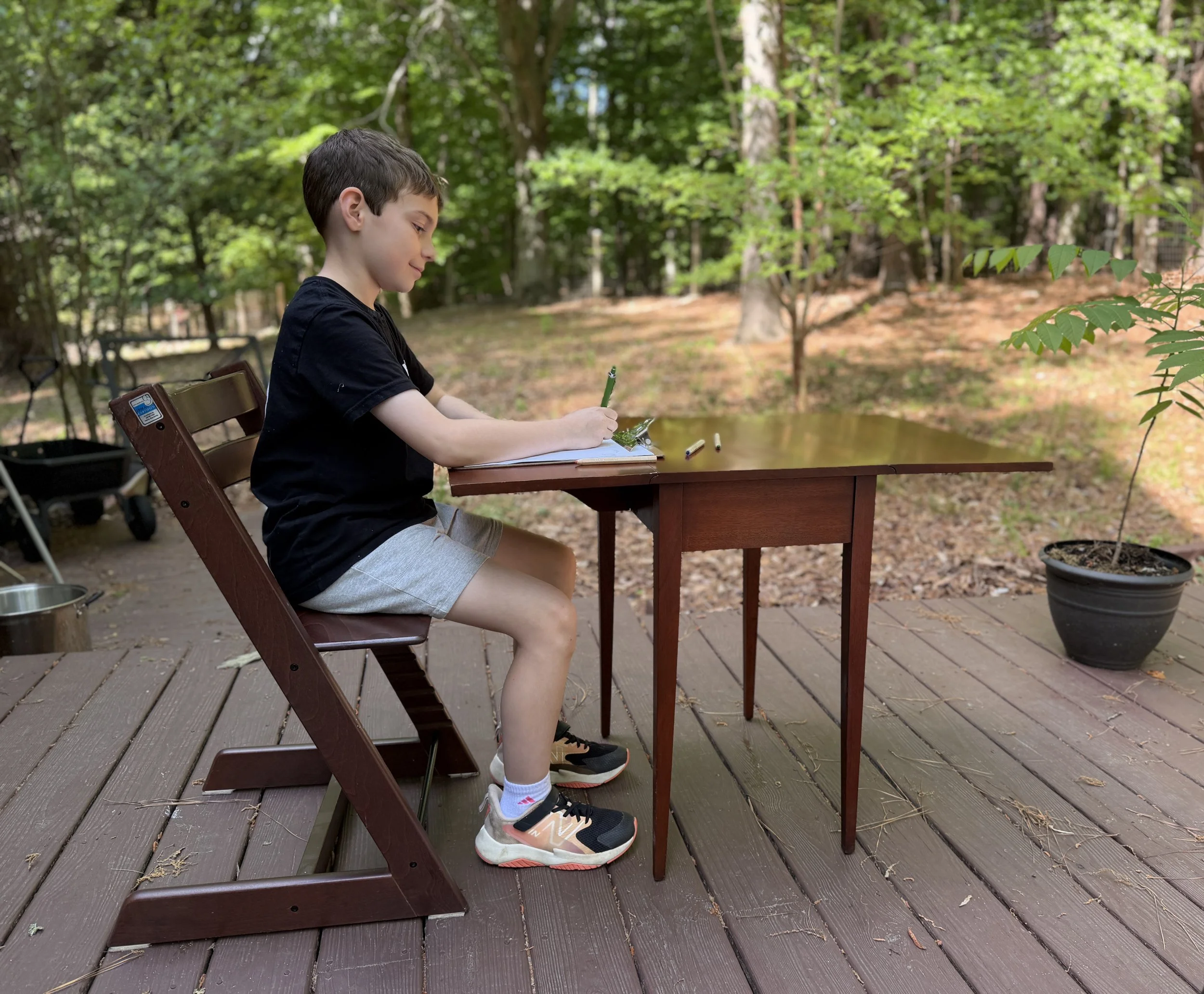
Proper Handwriting Posture
Sit upright, with feet flat on the floor, centered on the chair.
Kid Sized Furniture
Having kid size furniture is key here! Tables and chairs should be sized appropriately for your child.
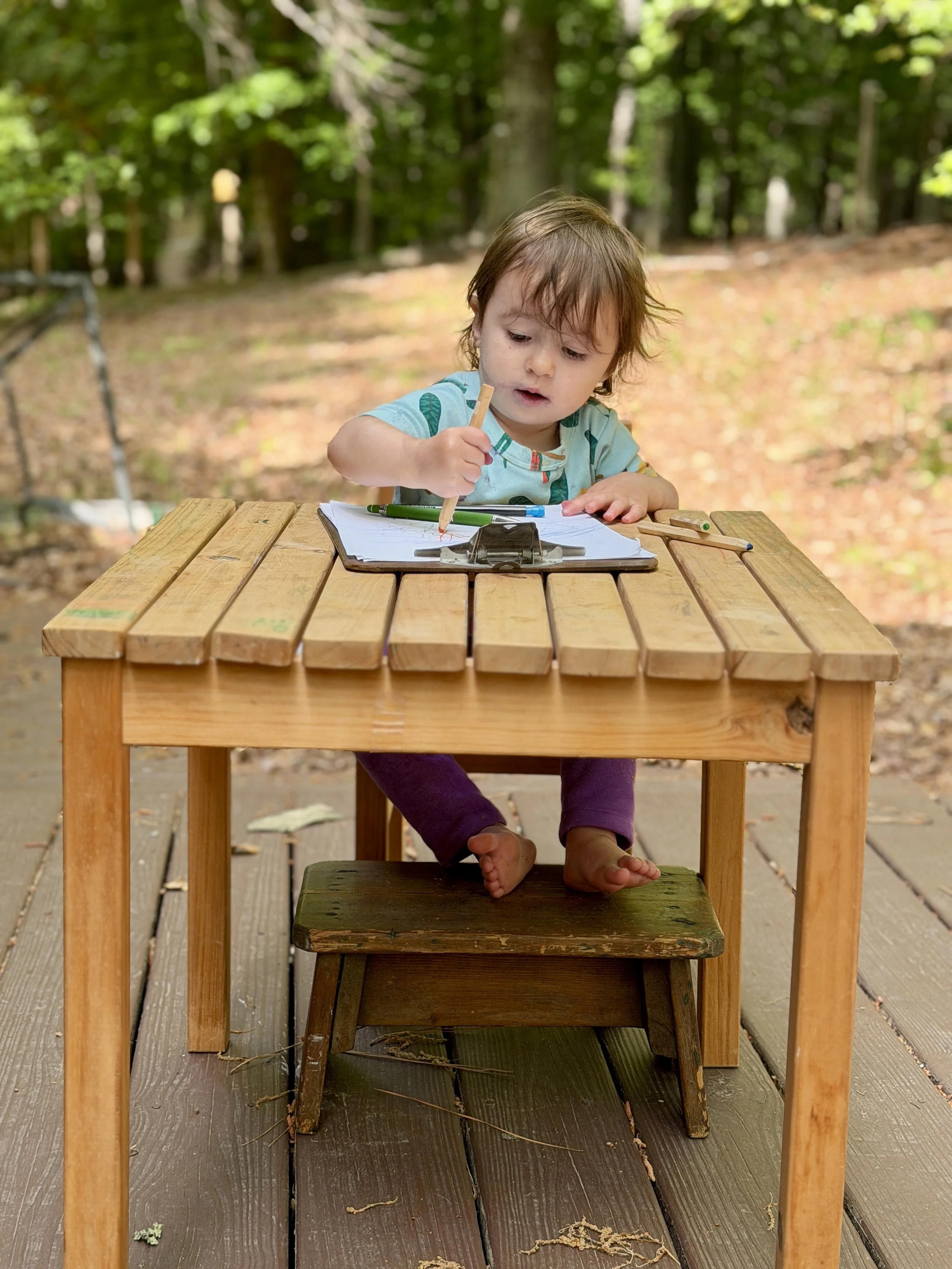
Kid Sized Furniture
It’s never too early to get your child matched with correctly sized furniture. The footstool allows her feet to rest comfortably.
Bring Your Child Up to Table Height
Use special furniture, such as the Stokke Tripp Trapp Chair, to bring your child up to the height of an adult table, while providing a platform for them to rest their feet on. This piece of furniture is height adjustable, so it can grow with your child.
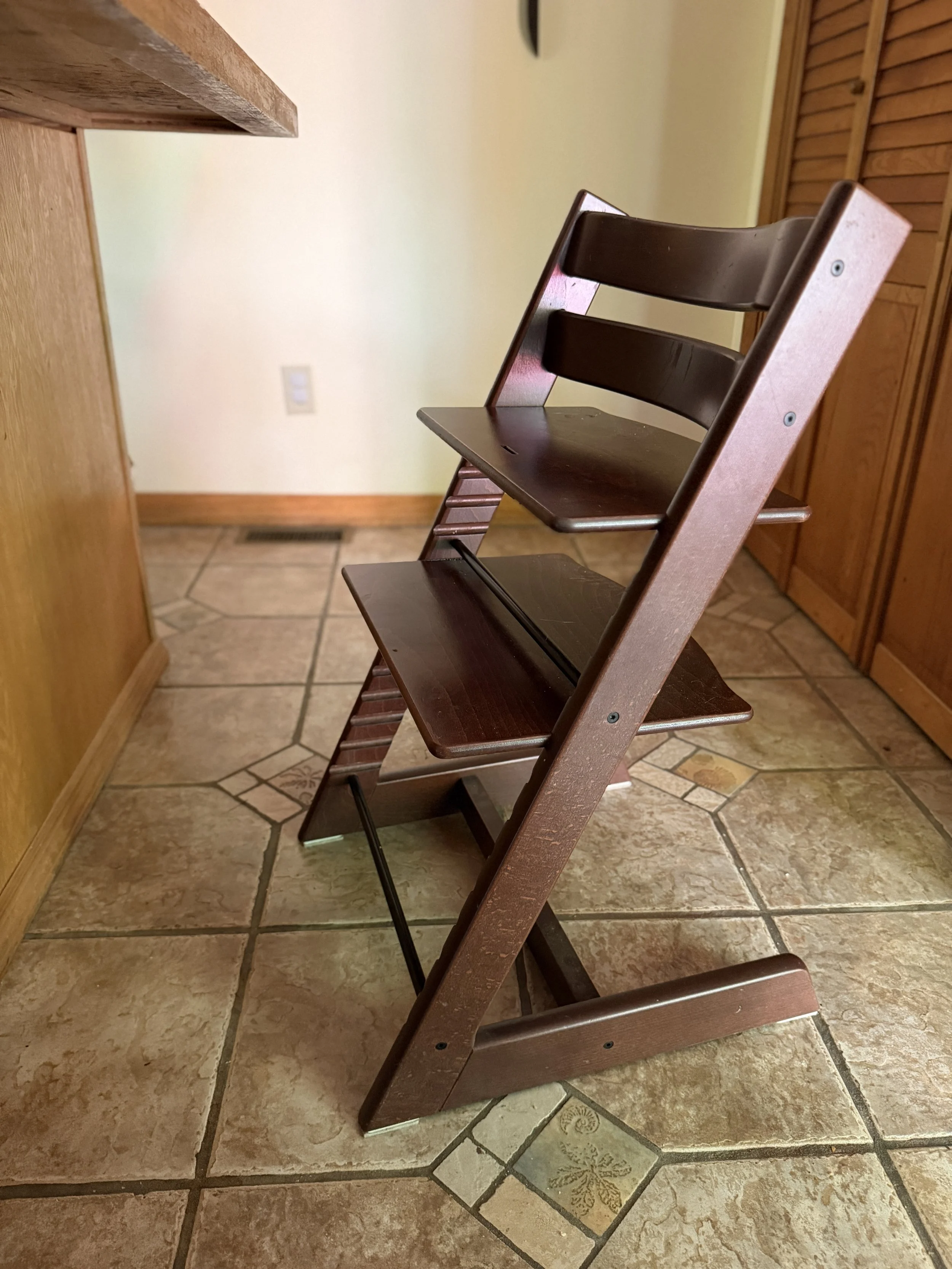
Adjustable Kid Furniture for Handwriting Success
This chair grows with your child from toddlerhood through elementary school. We got a lot of use out of our Stokke Tripp Trapp Chair in our household!
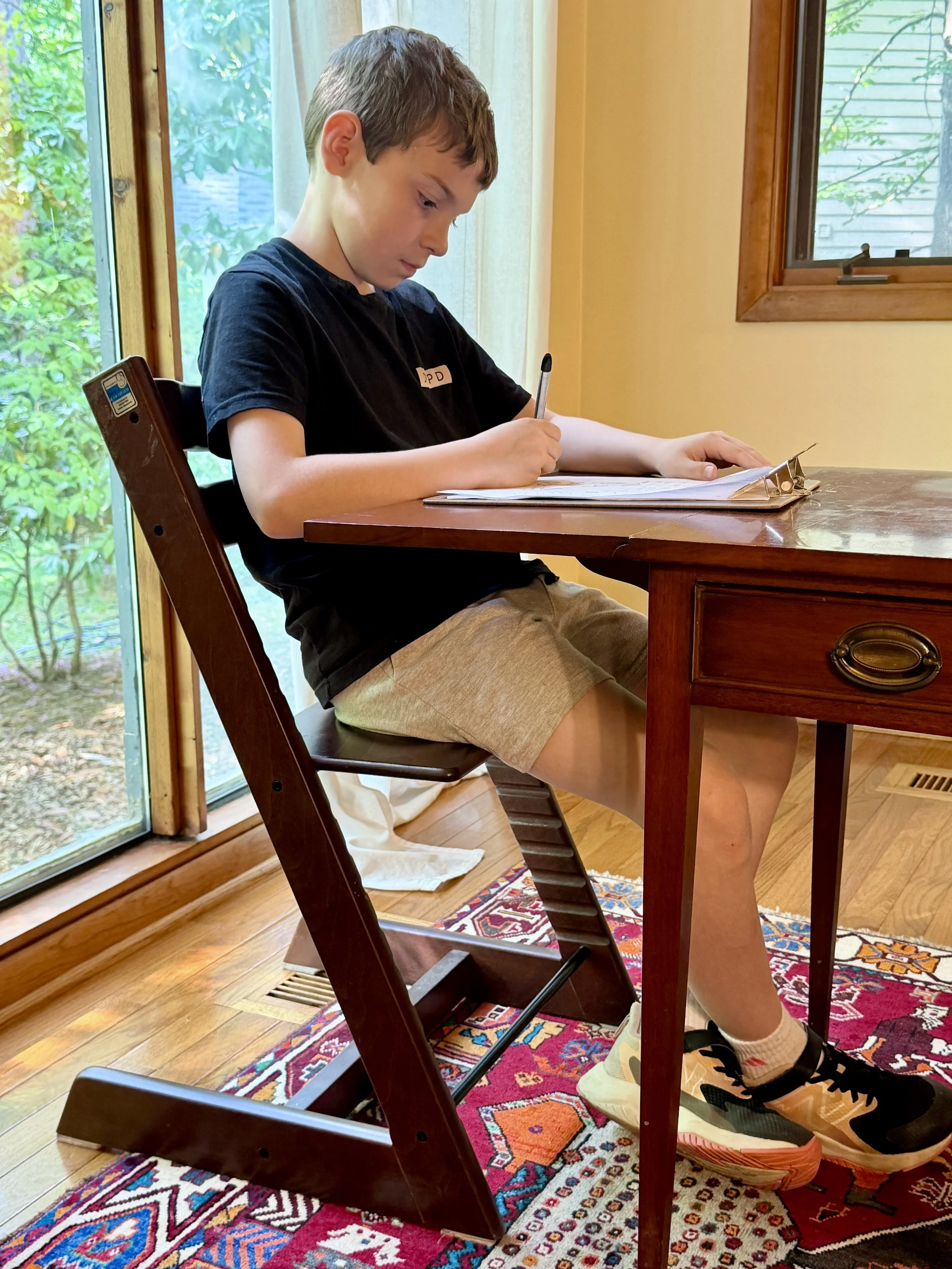
Lots of Use Value
Older children can benefit from height adjustable furniture as well to ensure they are correctly positioned at their table.
Correctly Positioned Paper
Not only is important to correctly position the body, proper paper placement is also key. When writing in print, your child should slightly tilt their paper so the corner of their paper that matches their dominant hand is slightly elevated (20-45 degrees). Their non-dominant hand, also called their “helping hand” should hold the paper steady, so it does not slip when they are writing.
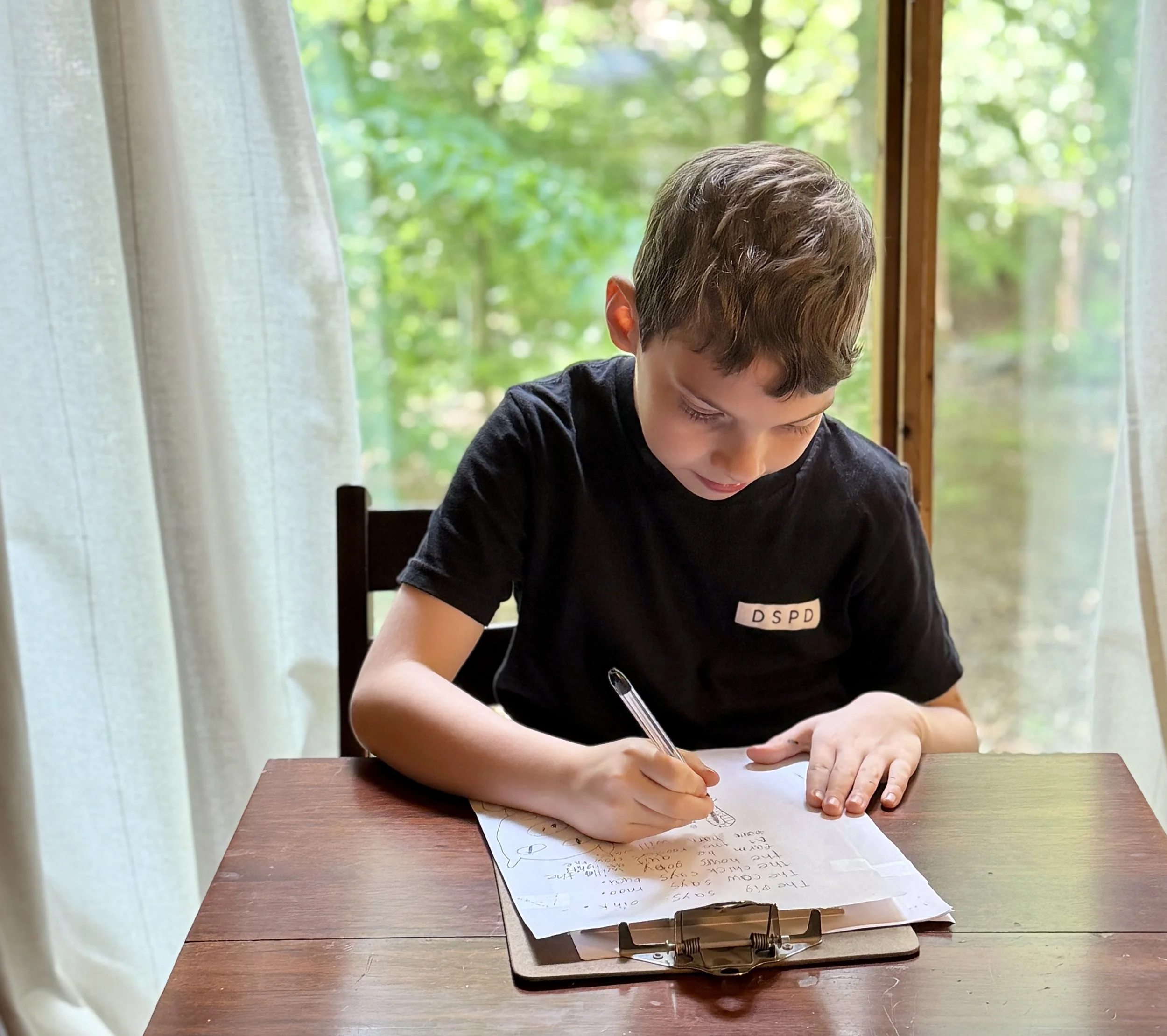
Correct Paper and Hand Placement
The paper is slightly tilted and his helping hand holds the paper steady.
Pencil Grip
Your child should start working on proper pencil grip by age 4. There are two pencil grips considered correct, the tripod grip and the quadropod grip, shown here, on the Learning Without Tears™website. Ask your child to practice picking up a crayon, scribbling a few lines, putting it down, and then picking it up again. This repetition will help them internalize proper finger placement.
Pencil Grip Accessories
If your child is struggling with correct grip, try adding an accessory to their pencil that will shape their fingers in the correct position. Pencil grips come in all shapes and sizes, so try a variety pack and see what feels most comfortable and supportive to your child. After your child gets used to the correct placement of their fingers, you can fade out use of the pencil grip.
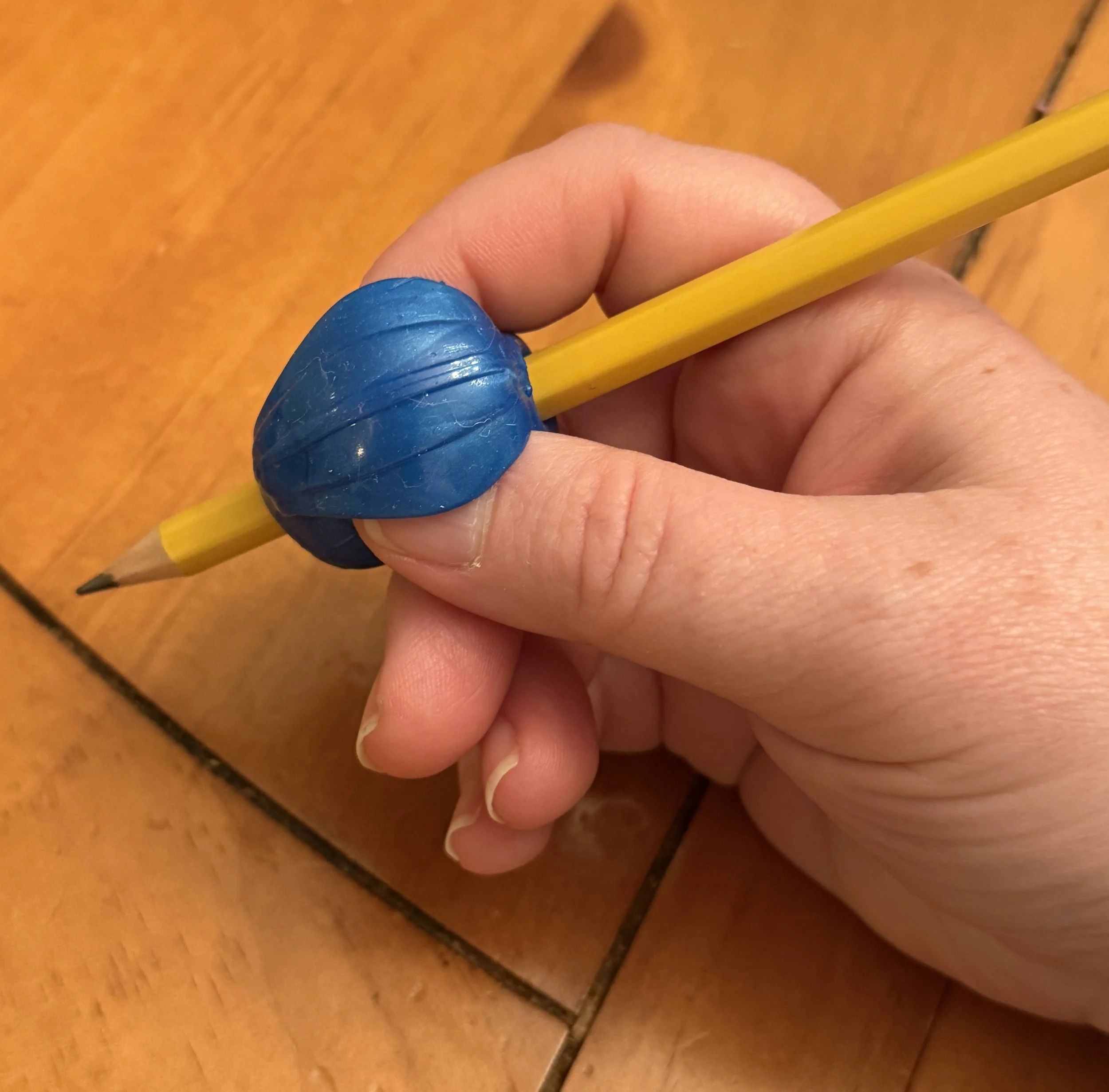
Experiment With Pencil Grips
This was my son’s favorite pencil grip!
When An Occupational Therapist Can Help
There is often a narrow window of time in which a child’s pencil grip is malleable. Typically, an older student will struggle to change their pencil grip because a different hand position feels so alien to them. In this case, as long as the grip is functional, meaning they can write in that position at a responsible speed, without pain, it’s fine for them to keep their non-standard grip.
However, sometimes, an older student will like using a pencil grip to help them hold their pencil in a standard position. An occupational therapist can work with your child to help them find a functional grip, if they are experiencing physical discomfort with writing or find handwriting slow and laborious.
How Engaged Minds Tutoring Can Help
Working with a tutor can provide the one-on-one, in the moment, oversight and coaching that is especially vital in developing proper penmanship. Handwriting tutoring is often a helpful adjunct to occupational therapy, as it offers to the opportunity for targeted practice. At Engaged Minds, we have tutors experienced in conducting multi-sensory handwriting instruction, that is fun and effective.
Wrapping It Up
Now that your child is sitting upright, with their paper properly positioned, and the pencil held correctly in their hand, they are ready to start writing their first letters! We’ll jump into that in our next blog post.
