Phonological Awareness: Processing the Sounds We Hear to Get Ready to Read
Why Develop Phonological Awareness Skills?
Many people don’t know that, like letter names and sounds, phonological awareness is a key foundational prerequisite skill for reading and spelling. While your child is in the process of learning letter names and sounds, they should also be working to develop their phonological awareness skills.
In this post, we explain what phonological awareness is and how to practice it with your child to get them ready for literacy.
Auditory Processing
Phonological awareness refers to the ability for the brain to process sounds. It’s an essential part of learning to read!
What is Phonological Awareness?
Phonological awareness is a fancy way of saying that a learner pays attention to and processes the sounds they hear in words. This takes place purely on an auditory level, just by listening to the sounds in a word; it does not incorporate printed text. This has nothing to do with how well your child can hear; rather it has everything to do with how their brain handles the auditory information it receives.
The skills that we recommend practicing with your child are rhyming, identifying starting sounds, ending sounds, and blending. We’ll walk you through what each of these skills are and how to practice them.
Rhyming
Words rhyme when the ending sounds the same. For example, jam, Sam, and ram rhyme because they all end in /am/. Similarly, stay and weigh rhyme even though they are spelled differently, because they end with the same sound, /ay/.
There are lots of fun ways to expose your child to rhyming, such as reading picture books that feature rhymes and pointing out the rhyming words in the story when you see them. After modeling this frequently, ask your child to find the rhyming words themselves.
Other great ways to practice rhyming include singing children’s songs and nursery rhymes, which often feature rhyming. After you sing together, go back and explicitly point out where the rhyming took place.
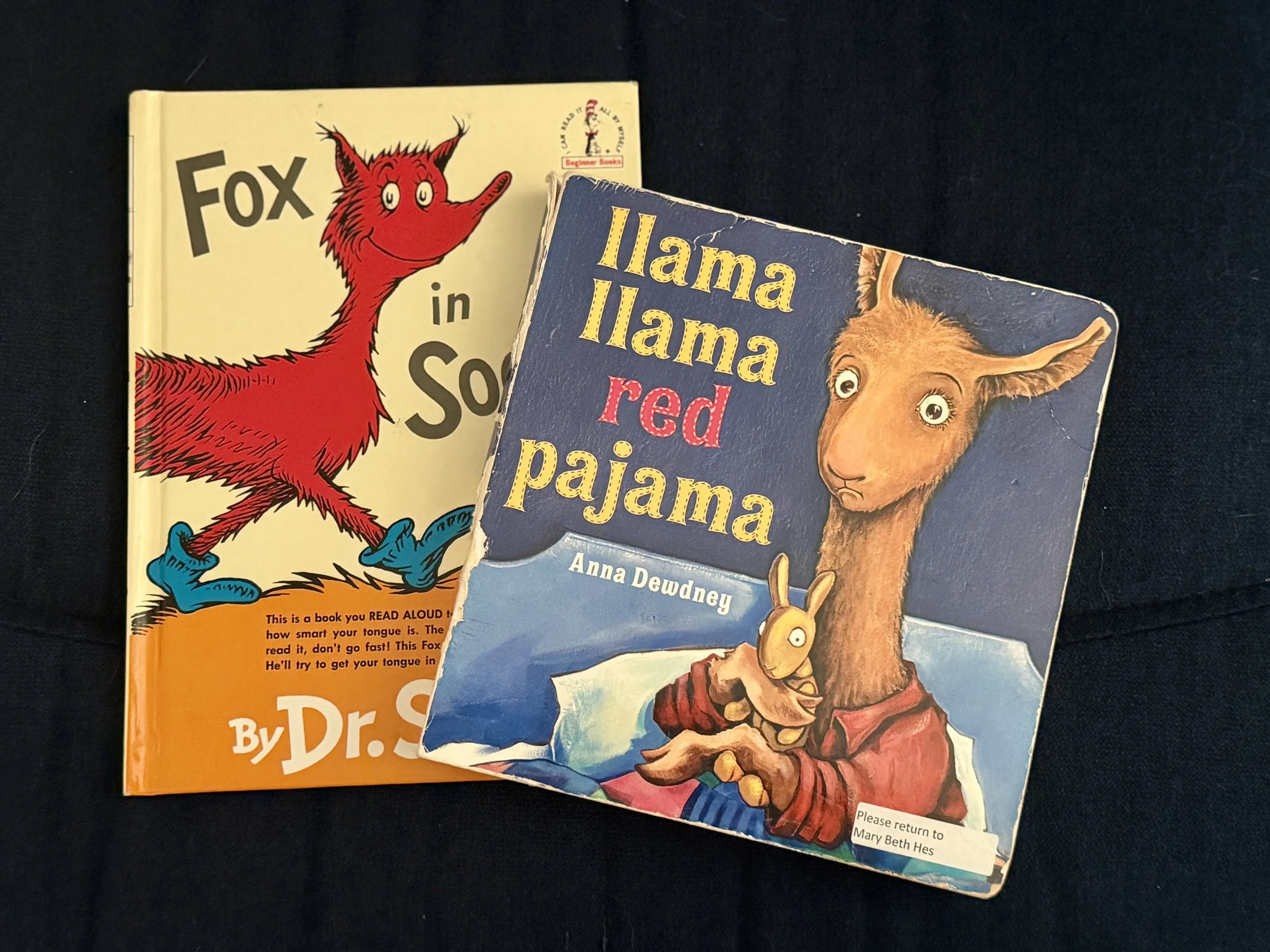
Read Books That Feature Rhymes
Llama, Llama Red Pajama by Anna Dewdney and Fox in Sox by Dr. Seus are a couple great examples of books that feature rhyming!
Beginning and Ending Sounds
Identifying what sounds words start and end with is another vital, fundamental literacy skill. Here’s how to practice it!
Point to common objects in your environment. State the name of the object and ask your child what sound it starts with. If they need help with this, exaggerate the beginning sound in the word when you say it aloud.
If your child has difficulty with this, model the process by telling them, “This is a book. /B/-b/-/b/ book. It starts with /b/.”
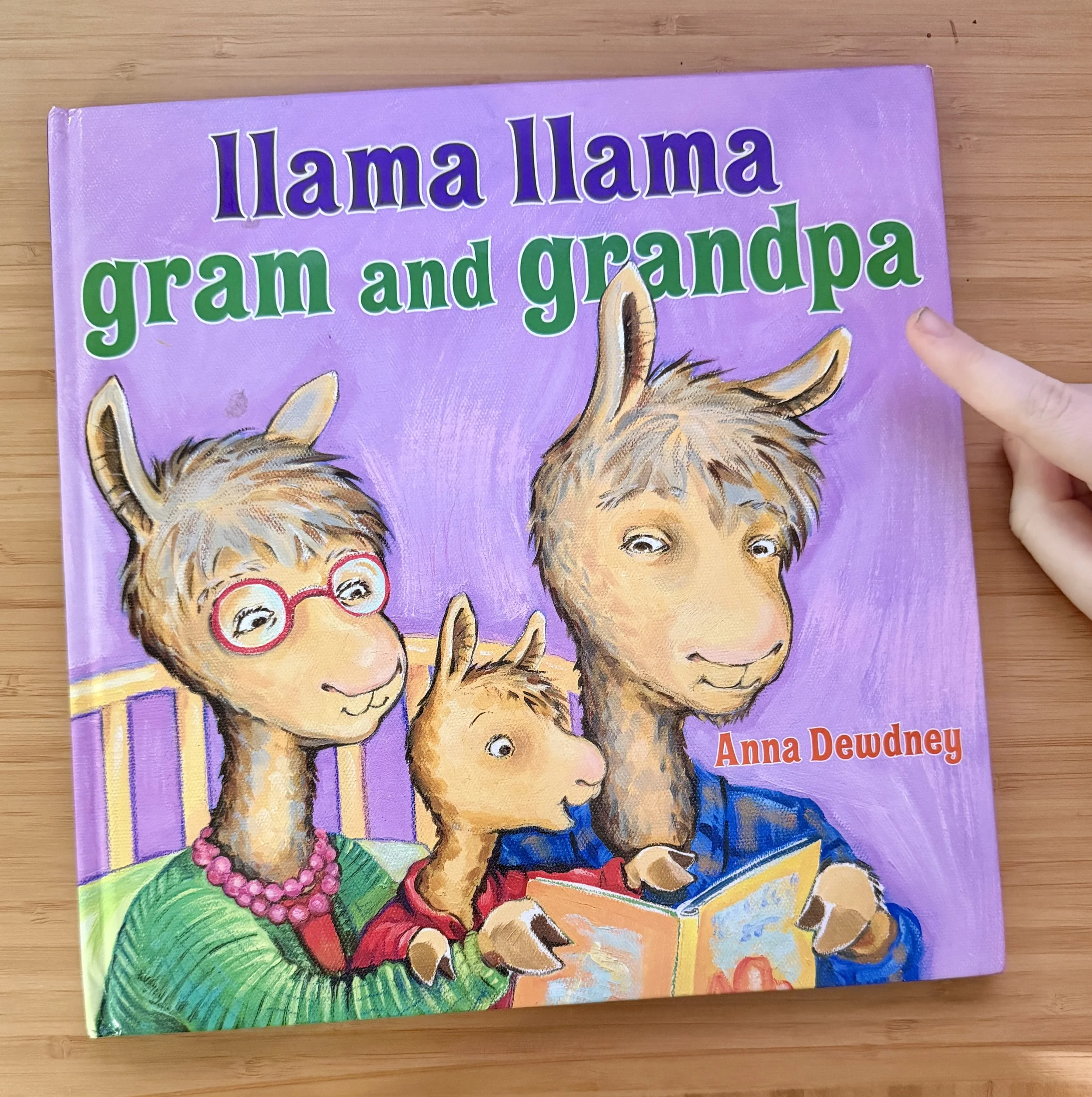
Identify Starting Sounds
Point to objects in your environment and ask your child to identify the sound the object starts with.
Once your child has mastered this, you can repeat this process with ending sounds.
When working with an Engaged Minds tutor, we enhance these exercises, by adding pictural sorts. This makes the exercise multi-sensory, so the child is seeing, hearing, and moving, which accelerates learning and understanding.
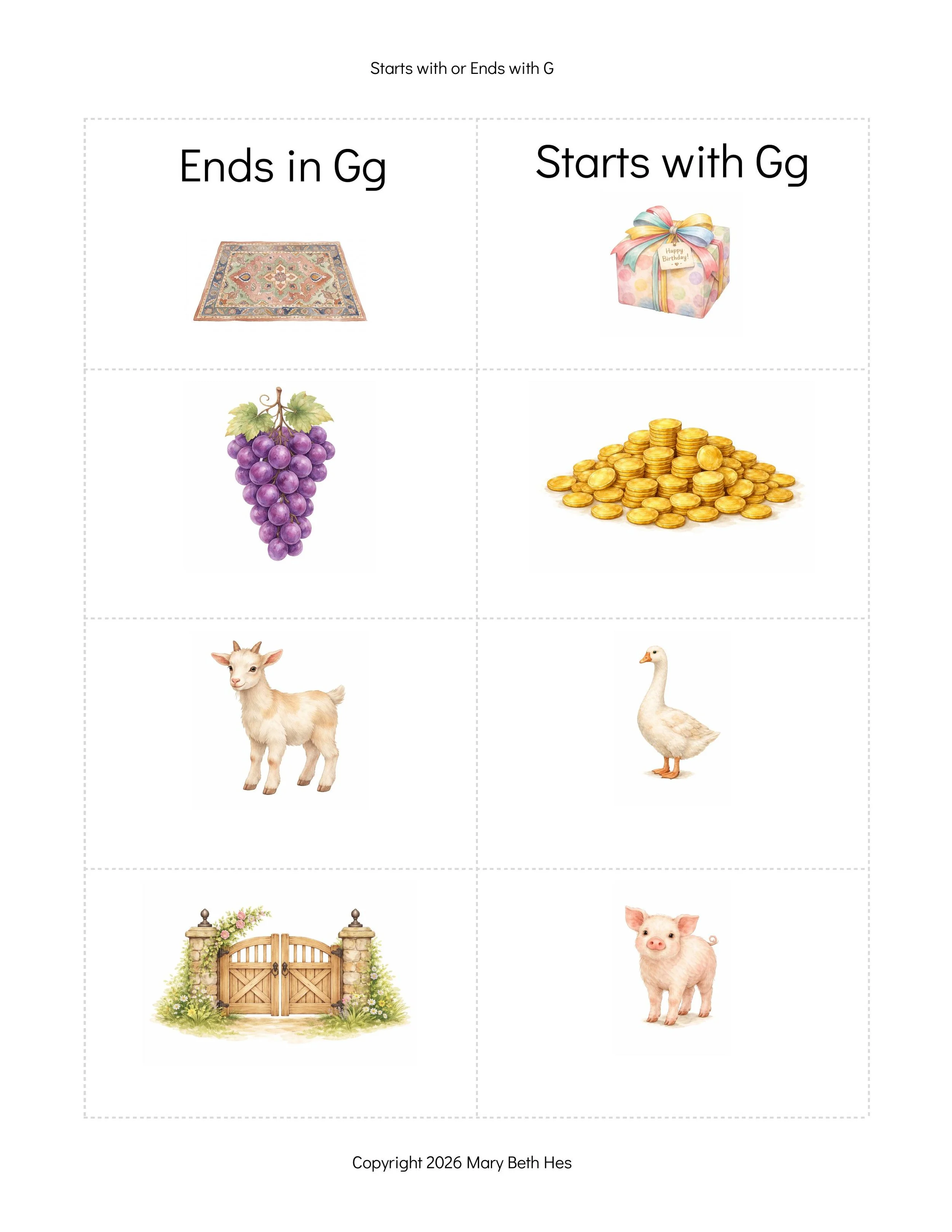
Starting and Ending Sound Sorts
During tutoring, students practice sorting words by their starting and ending sounds.
Blending
We all know that breaking words into their sounds (aka “sounding out words”) is a critical part of learning how to read. What folks may not realize is the important role of blending sounds in putting it all together to read a word. Once a child can provide the sounds in a word, they need to be able to blend them together smoothly to make a word.
You can practice blending at home by giving your child the sounds of a word pre-segmented and asking them to blend the sounds together to make a word.
For example, give your child the sounds /p/-/i/-/g/ and ask them to blend them together. They’ll say the word “pig!” If your child needs help with this, repeat the sounds and model how to blend them together.
How We Can Help
Building phonological awareness is important for all students, but especially for kids with dyslexia, as dyslexia is primarily a deficit in phonological processing. Kids with speech delays are at risk for difficulty with phonological processing, and consequently later for dyslexia. Learning differences, such as dyslexia, have a genetic component, so be on the lookout for that if someone in your child’s family (parent, uncle, grandparent, or cousin) had difficulty learning how to read or if your child is taking extra time to learn to use oral language correctly and to articulate words properly. These learners benefit from extra practice and targeted exercises with phonological awareness right on their level. By getting them help early, with an Engaged Minds tutor, you set them up for success in reading. Click here to sign up now!
Watch to see how we practice blending sounds during a tutoring session.
Bringing It All Together
Once your child is able to do these phonological awareness activities with at least 90% accuracy, they are ready to pair their sound work with text. Check out future blog post to see how to put it all together to help your child read their first words!
