Ready, Set, Write!
Ready, Set, Go!
Your child is sitting with proper posture in furniture the right size for them. They are holding their pencil correctly and their paper is placed at just the right angle. What’s next?
Now it’s time for them to learn the mechanics of handwriting. This post will go over the order to learn letters, how to form letters correctly, and what to do if fine motor control is a barrier.
Order to Learn Letters
You may be wondering which letters your child should start writing first. There are different schools of thought on this, and ultimately, no right or wrong answer.
Handwriting Without Tears®, a quality multi-sensory handwriting program, starts with the capital letters, since they are often easier to form than the lowercase letters. Orton-Gillingham practitioners may start with lowercase letters since they are more common. Different programs introduce letters in a different order, but they are typically grouped logically, according to letters that are formed in a similar fashion.
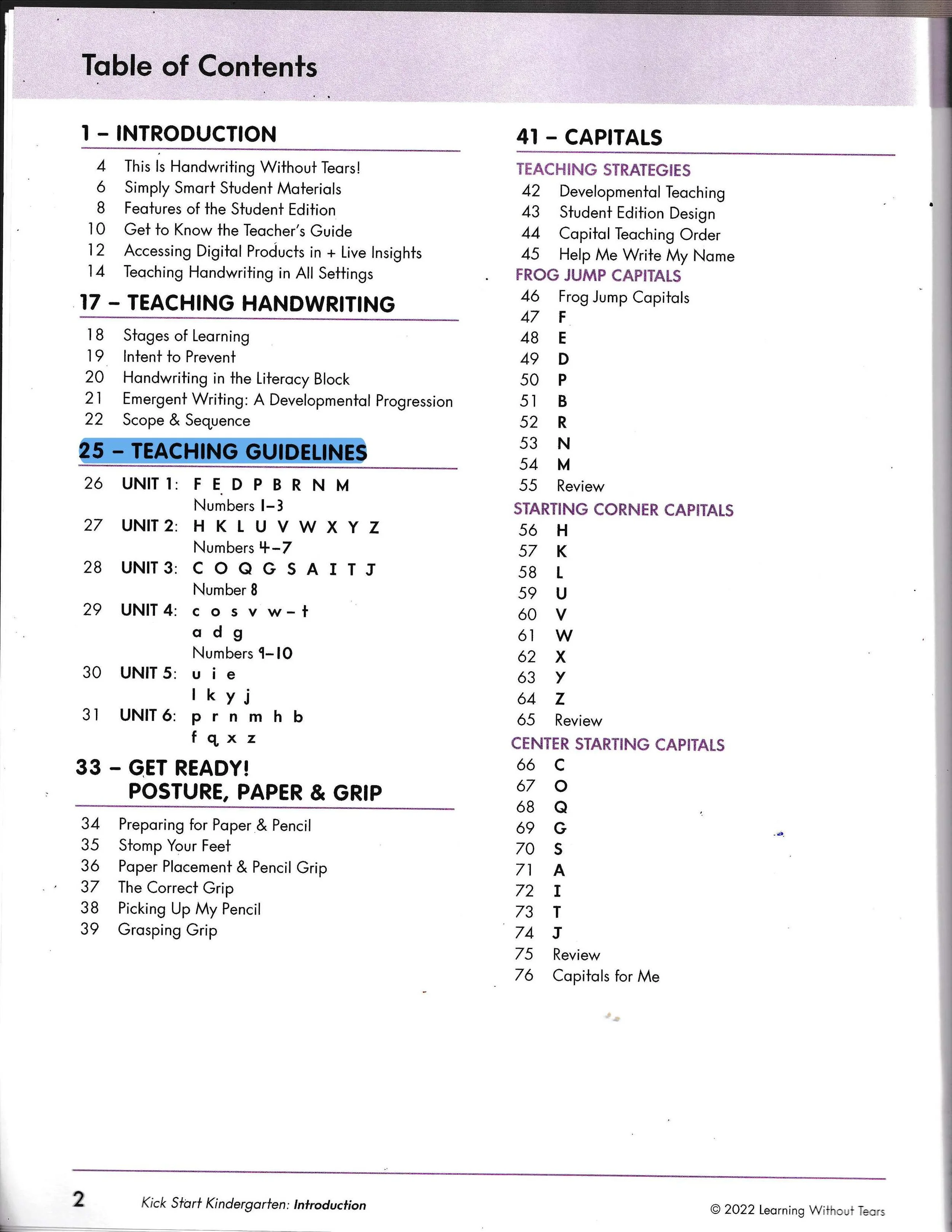
Letter Introduction
This image shows the order that Handwriting Without Tears® introduces letters. Letters that use the same starting strokes are grouped together.
If your child has the fine motor control to pair their letter writing with the letter names and sounds they are learning, it’s great to work on both skills at the same time! For example, they would be learning how to write the letter c while they are learning its letter name and sound. This is the classical Orton-Gillingham methodology.
However, if fine motor skills are lagging behind letter names and sound recognition, you may need to work on those skills at a separate pace, if needed, so that the student’s reading progress is not held back by their fine motor challenges. If this is the case, consider working with an occupational therapist and an Engaged Minds handwriting tutor to bring their writing skills in alignment with their reading.
Of all the many sequences out there for introducing letters, I think the order of letters introduced in the Trace with Me Pre-Handwriting Practice book is the easiest to follow, so I recommend using this order if your child has difficulty with fine motor control.
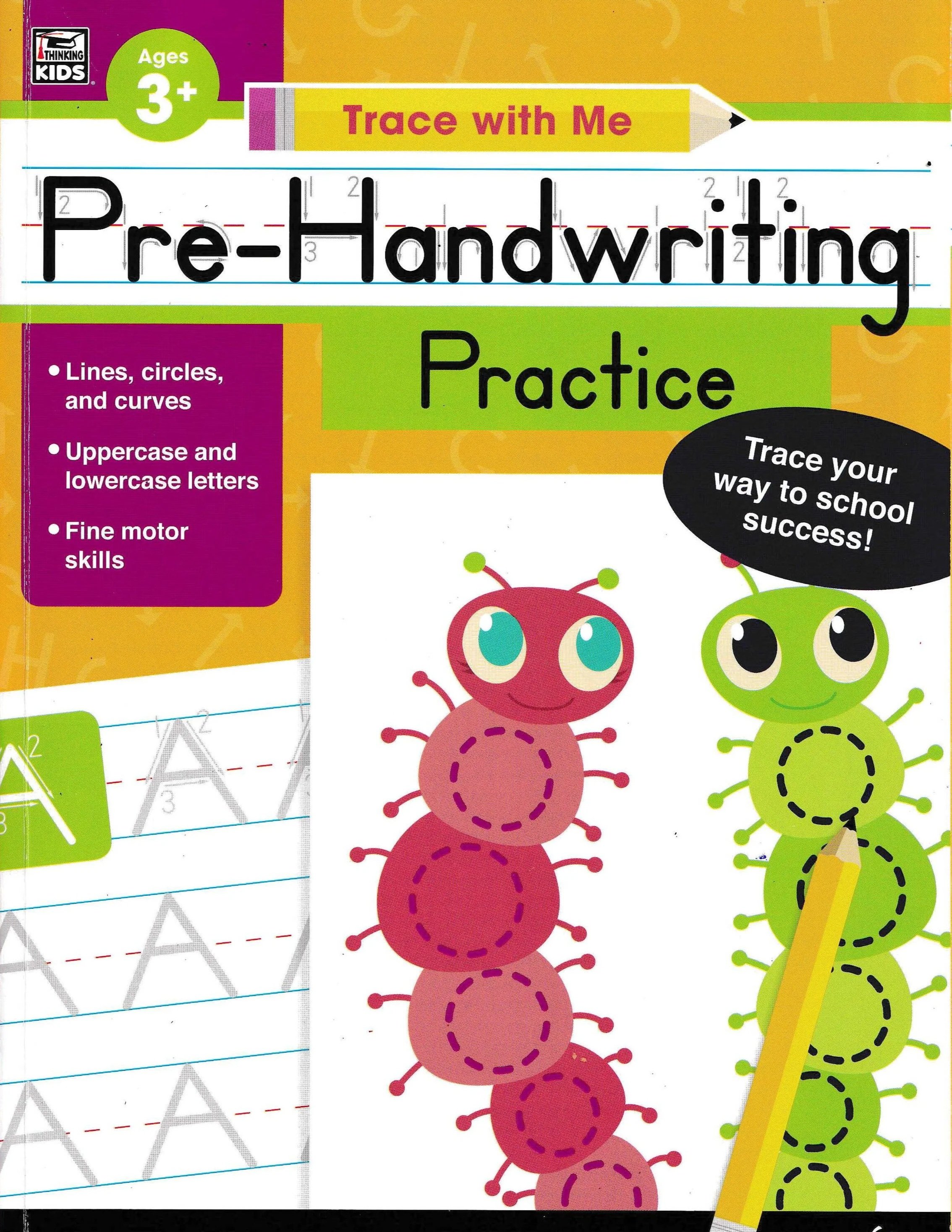
Tracing Practice
This is my favorite resource for tracing and early letter practice.
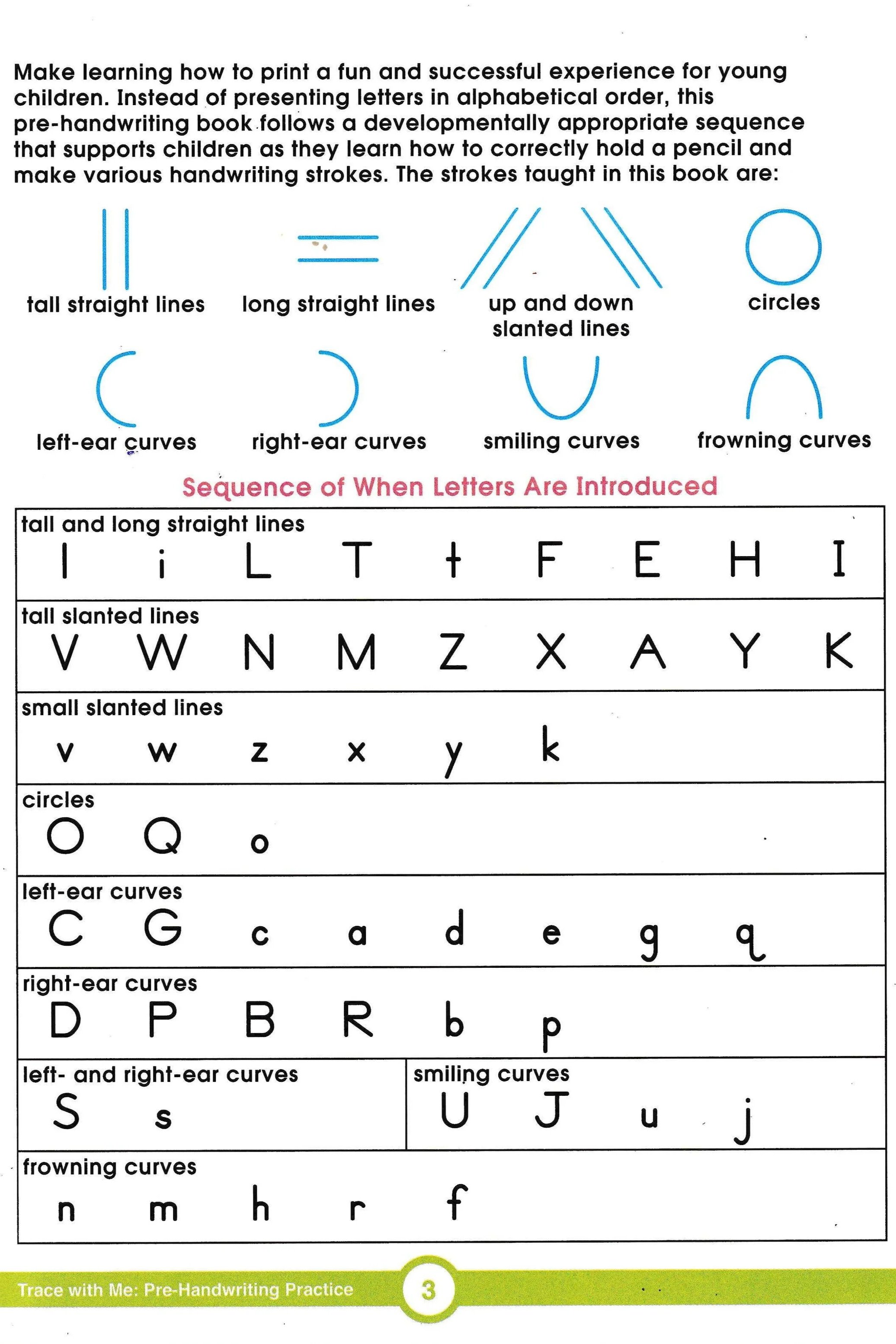
Pre-Handwriting Practice Sequence
Of all the various orders to learn letters, my favorite is this one from the Trace with Me Pre-Handwriting Practice book.

Tracing S Shape
The Trace with Me Pre-Handwriting Practice book offers practice tracing shapes before forming letters independently.
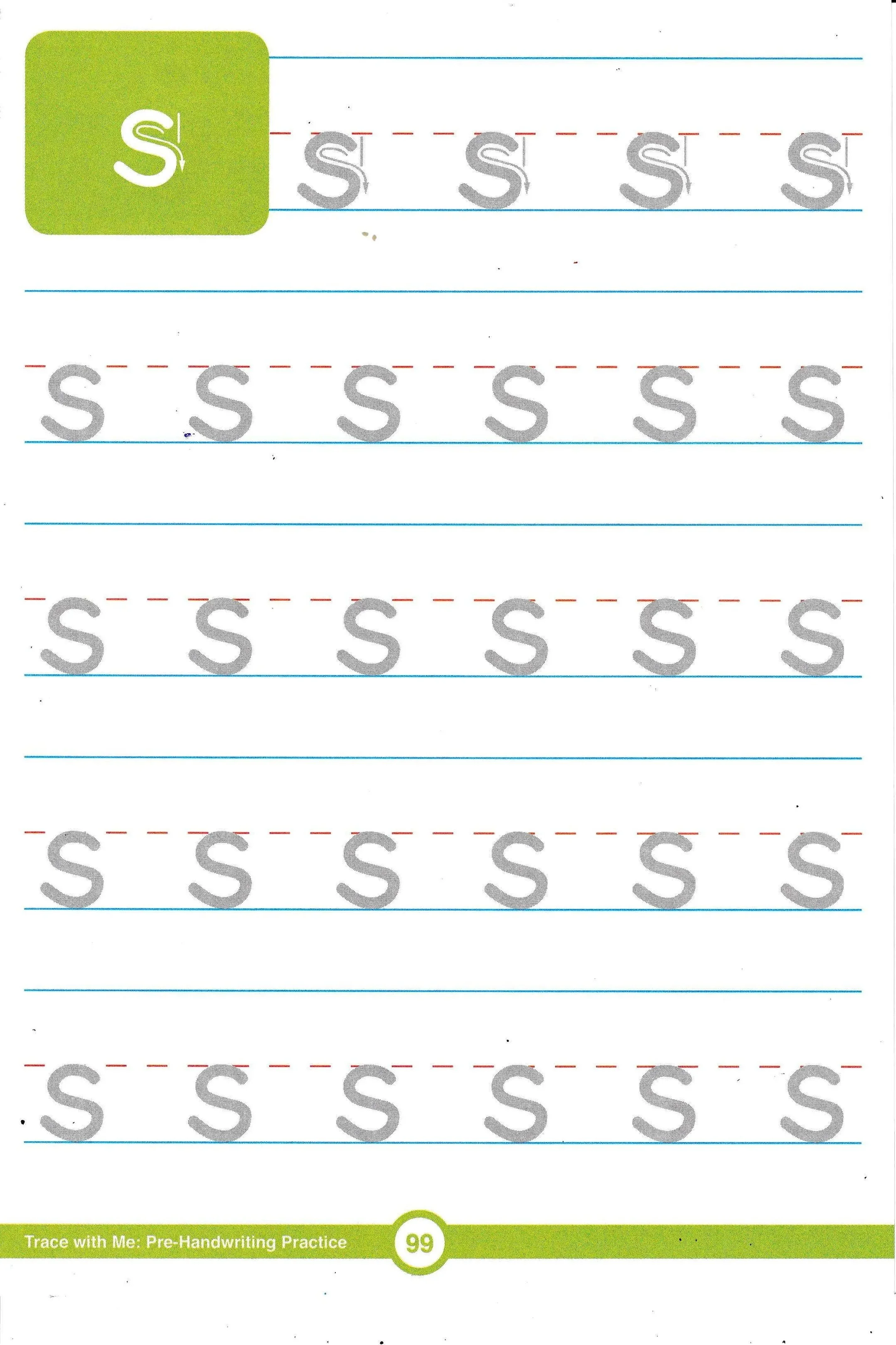
Trace S
After practicing tracing the s shape in vines, the student is able to trace the letter s.
Letter Formation
Another critical part of getting your child set up for writing success, is making sure they are forming their letters correctly. Unfortunately, handwriting has been de-emphasized in school and young students are often not coached to form their letters correctly. This leads to writing slowly and irregular looking letters. See this image as a reference for the correct sequencing needed to form each letter.
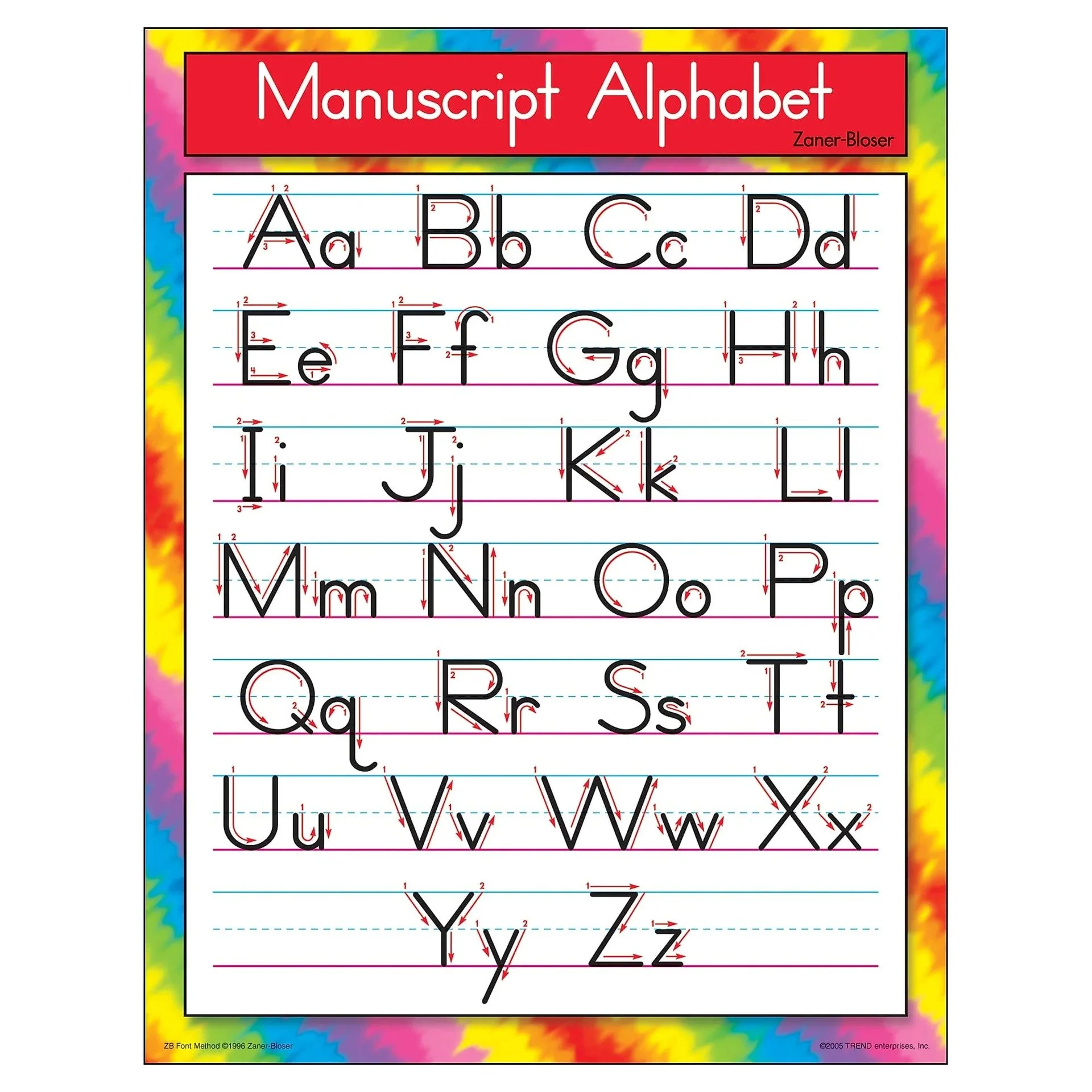
Zaner-Bloser Letter Formation Steps
Watch carefully to make sure your child is forming their letters correctly!
Again, there is a narrow window for building this habit correctly. Non-standard letters will often look irregular and take longer to form. Bottom starting letters are the biggest culprit in letter formation errors! Letters should always start from the top not from the bottom.

Funky F
Guess what letter this is? It’s an attempt at the letter f. I have seen several students write a lowercase f this way, bottom starting.
Form Good Habits
Instilling correct letter formation habits often takes an adult sitting with a child one-on-one to give them in the moment corrective feedback, especially when a learning difference, such as dysgraphia, ADHD, or a developmental delay, is present. An Engaged Minds handwriting tutor can help your child practice forming their letters correctly using fun, multi-sensory techniques!
The Power of Tracing
If your child is having trouble forming letters, they may need practice tracing first. Tracing is my favorite method for developing fine motor control because I have seen such transformational results from this technique! The secret to successful tracing practice is in the set up. Take my favorite tracing book, called Trace with Me Pre-Handwriting Practice, and remove the pages from its binding. Put the sheets inside a plastic sheet protector (like the ones you would find inside an office supply store) and put the sheets in a binder. Then, have the child trace on top of the plastic using an expo marker. This has the benefit of being easy to see (if too light pencil pressure is an issue), easy to erase without marks, making it reusable, and adding the fun and novelty of using whiteboard markers.
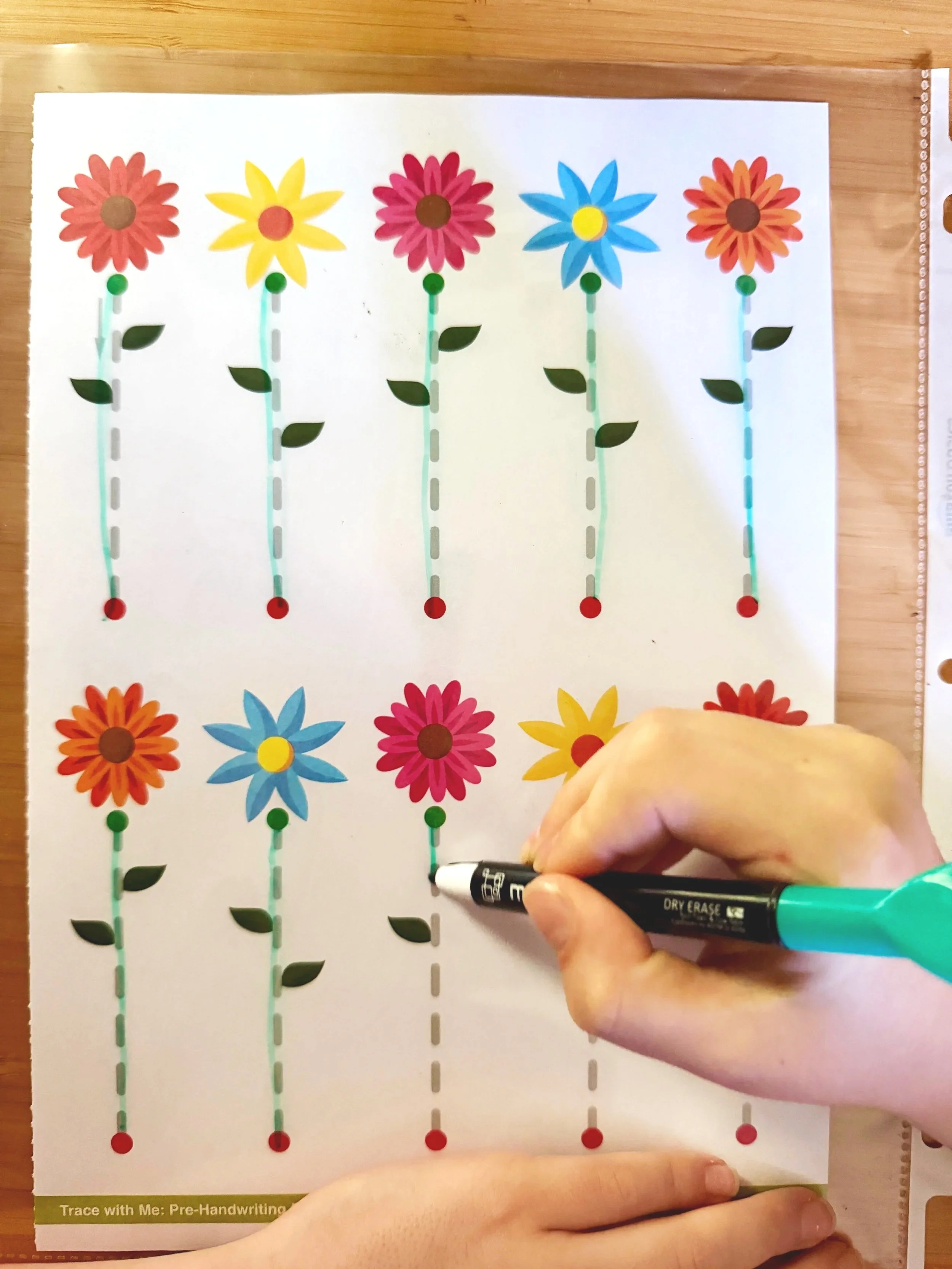
Trace on a Plastic Sheet
Put tracing pages inside of a plastic sheet and write over it with a dry erase marker for fun, repeatable practice.
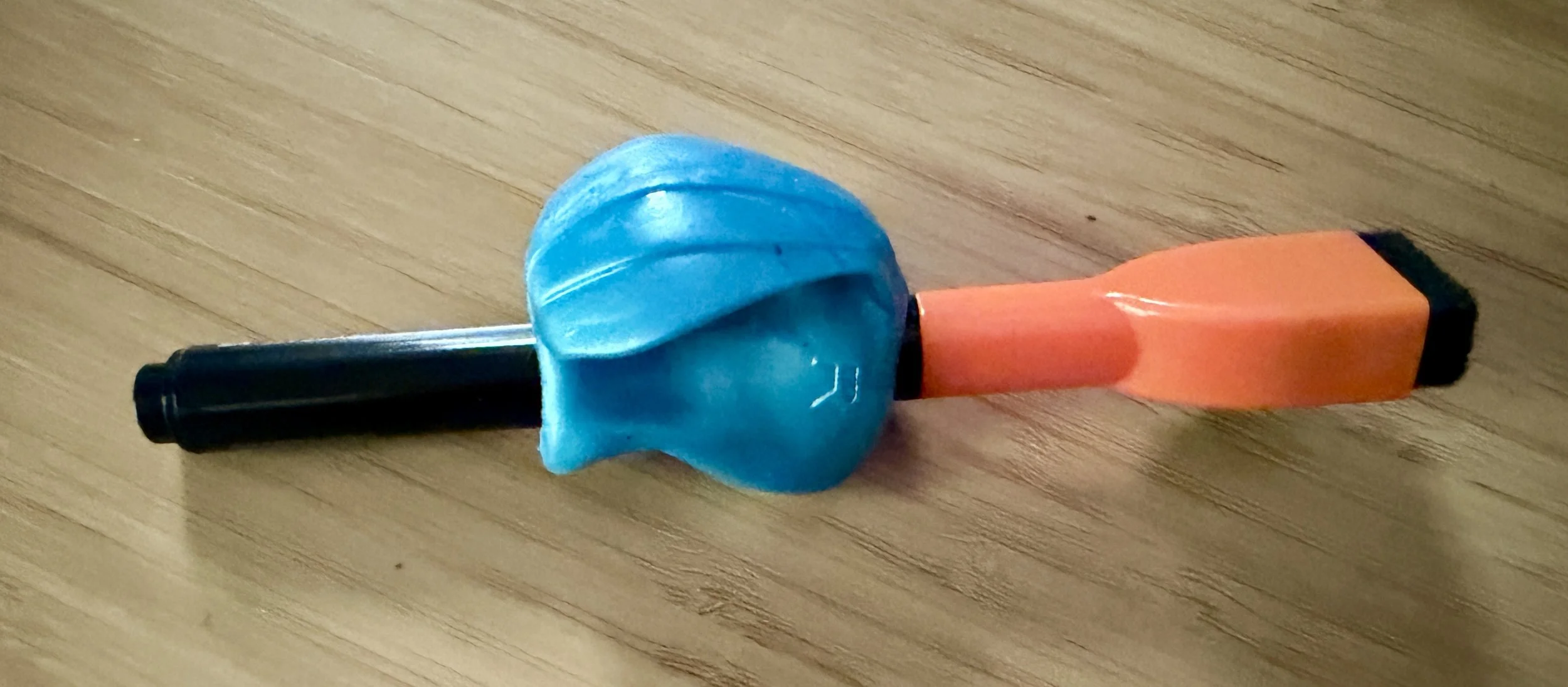
Add a Pencil Grip
You can even add a pencil grip to a dry erase marker!
Many kids are motivated by picking out their favorite color marker, so get a variety pack with fun colors! Tip: choose thin markers for better precision. If your marker is thin enough, you can wrestle a pencil grip onto it if your learner needs it.
Paper To Use
When starting out, choose a paper that allows your child to write as large as they need to in order to form letters correctly. Your child will also need to have a midline to guide their letter formation.
Check out this “Sky, Grass, Dirt” paper that I created that color codes each portion of the midline paper to help with correct sizing and spacing. This paper is also great for tracing on (add it to a plastic sheet and use with an expo marker for easy erasing). Students with dysgraphia may need to stick with larger, lined paper even as they get older. It’s better to write larger and neater, than small, and lose legibility.

Sky, Grass, Dirt Paper
Colored code lines help students place letters correctly on the page.
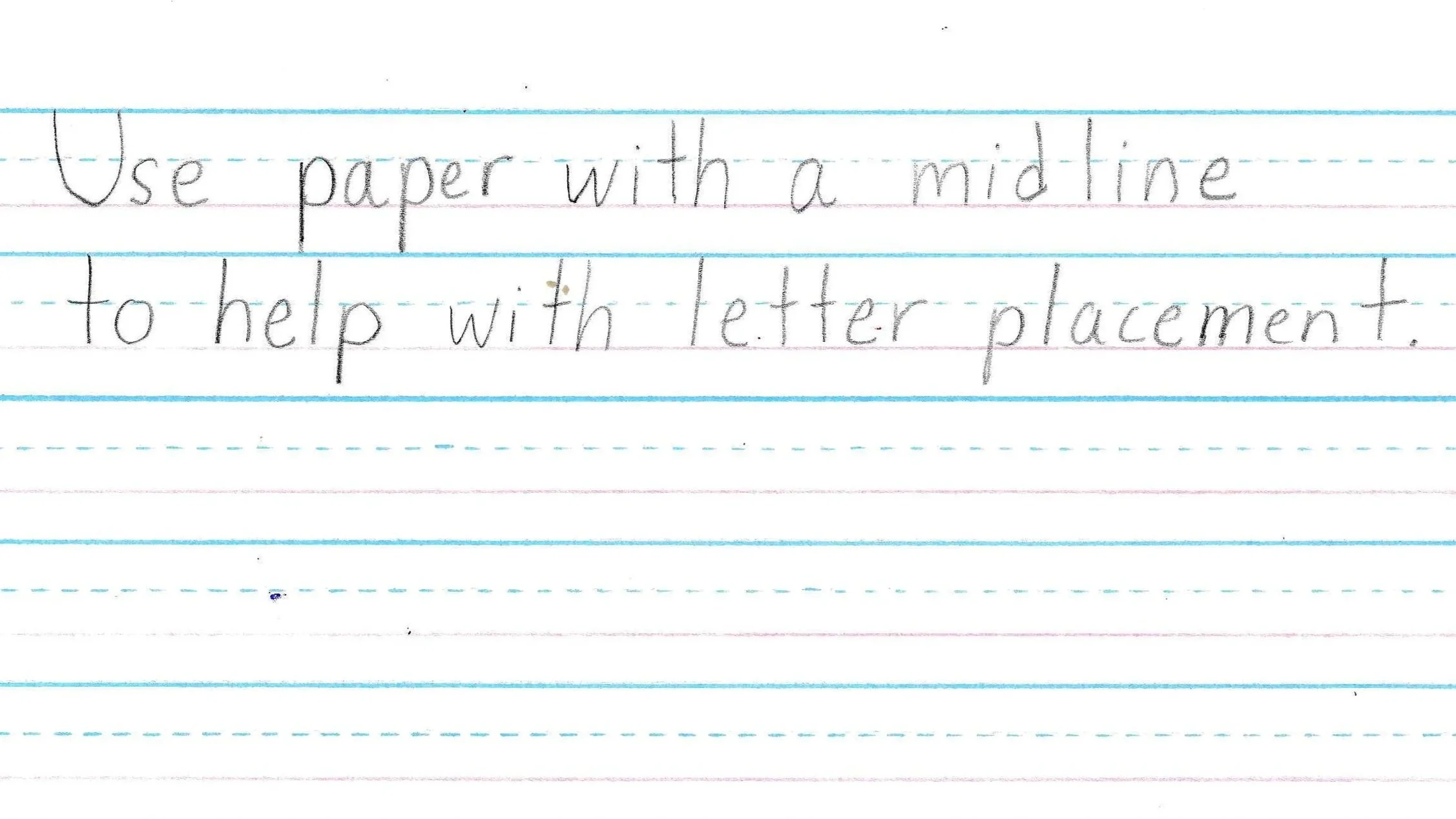
Midline Paper
Students should use midline paper as long as they need it to help with letter formation.
When to Seek Additional Support
If your child is struggling with the mechanics of forming letters, consider seeking support from an occupational therapist and an Engaged Minds handwriting tutoring. Children need the ability to write fluently and they may need professional guidance in order to develop this capability. An Engaged Minds handwriting tutor will give your child the one-on-one guidance they need to improve their fine motor control and ultimately learn to form letters independently.
