Ready to Read!
Now that your child knows the letters of the alphabet and the sounds they make, and can manipulate those sounds through phonological awareness exercises such as rhyming, segmenting, blending, and identifying beginning and ending sounds in words, they are ready to start putting it all together to read words! Best practices in early reading education focus on phonics; these are words that kids can “sound out.”
What Skills Should We Start With?
Kids who are first learning how to read should start with what we call “CVC words.” CVC stands for consonant-vowel-consonant. These are three letter words with a short vowel in the middle of the word. This is a great place for kids to start because each letter makes the expected sound and the words are short so the kid only needs to keep three sounds in their mind before blending them together.
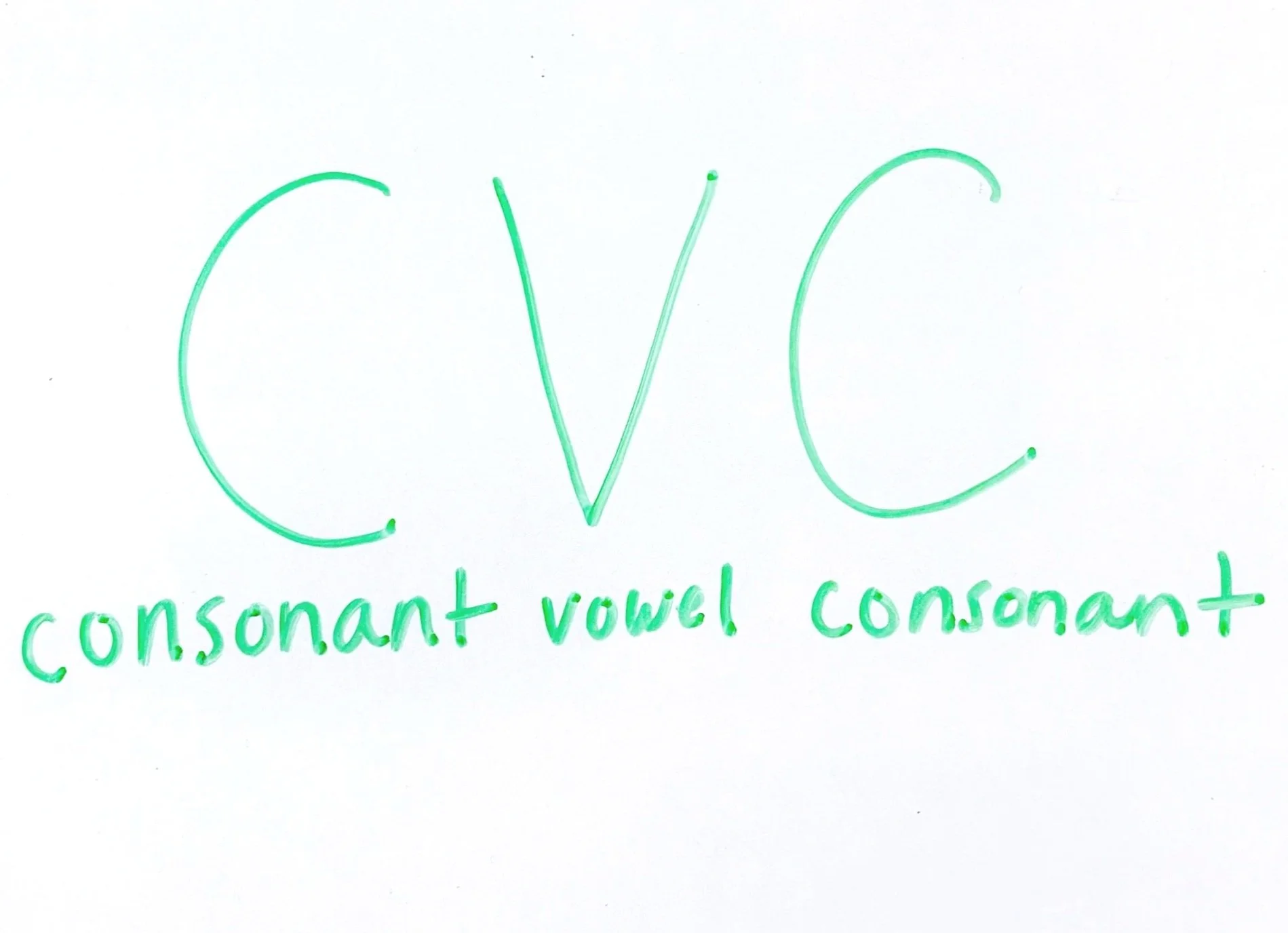
CVC Words
Start with CVC words since they are easy to sound out.
Start with words with the short a vowel only (example words: cat, map, rag). You’ll save words with short e, i, o, and u for later on, once they have mastered short a words.
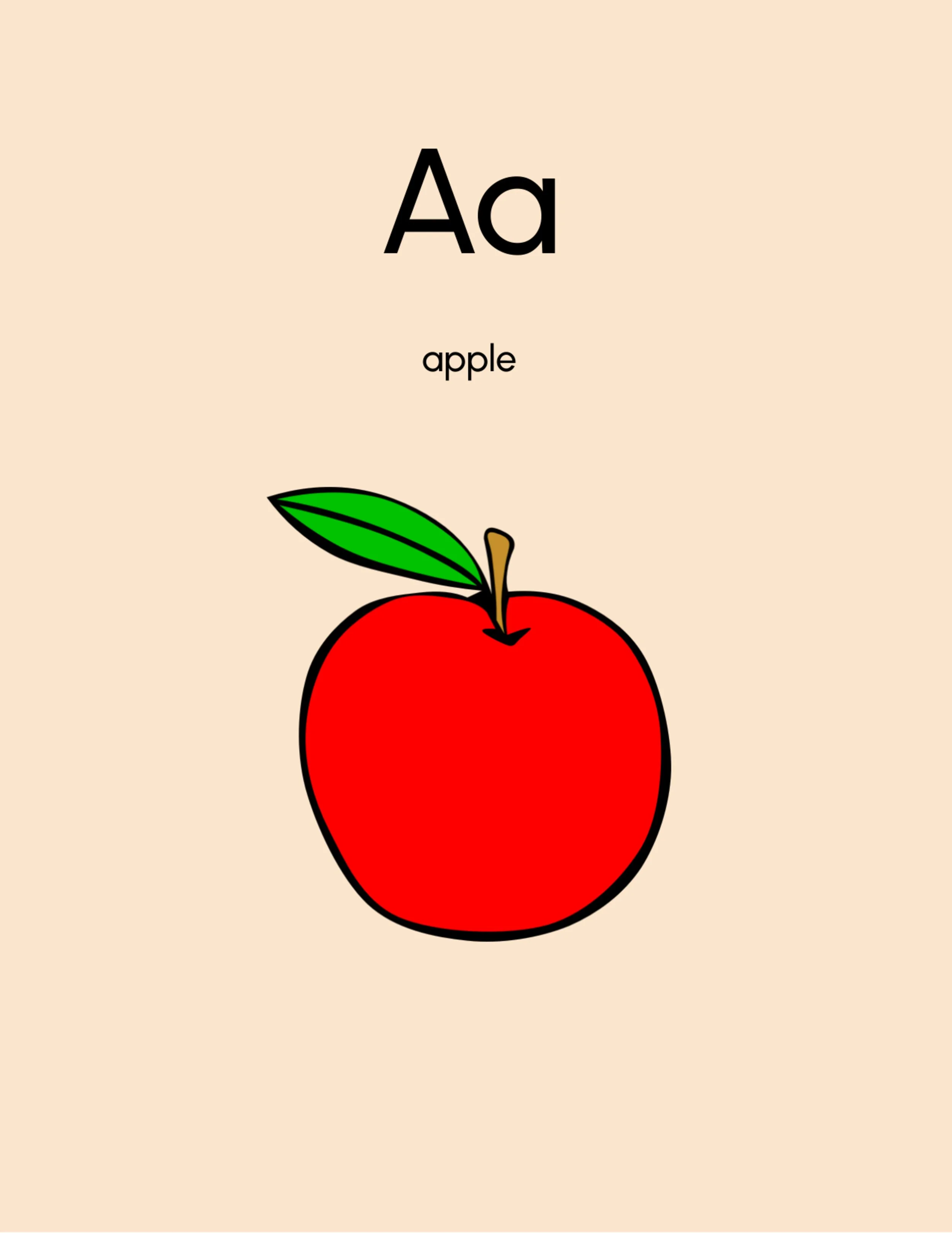
Start With Short A
Kids should start start decoding short a words like cat, bat, and sat.
How Do I Help My Child Read Their First Word?
The Basic Steps
Your child knows the letters of the alphabet, their sounds, and can blend sounds together. Now it’s time to put it all together to help them read their first word!
Start with a word like cat. If your child is going to read the word cat, point to each letter in the word. It can help to write the word big on a whiteboard so it stands out. Ask your child to tell you the sound of each letter you point to.
This child is sounding out the word cat.
If Your Child Needs Help
If the child needs help you could prompt them, “what does c say?” Once you get through all 3 letters, run your finger under each letter in 1 smooth motion to prompt them to blend the sounds together to make a word.
They may need a few tries to blend the sound together. If they have trouble with this, repeat the sounds back to them by saying “I heard you say /C/ /A/ /T/, what does that make?” If needed, you can help them say the sounds faster, which will help them blend the word.
If your child is still having difficulty, give them words to blend orally (no letters). For example, you could ask “what does /c/ /a/ /t/ make?” and show them how those sounds correlate with the word in print.
This child is receiving coaching to sound out the word cat.
Practice, Practice, Practice!
At first the process of decoding or “sounding out” words may be laborious. Your child may need time to work through each word, prompting when they get stuck, and many repetitions. If this is the case, do not be discouraged and do not shortchange this time! After a child has decoded a word repeatedly (number of repetitions needed varies child to child), they commit the word to memory in a process called “orthographic mapping.” Once orthographic mapping takes place, the student will have an immediate recall of the words anywhere they see them! The decoding process will become faster overall, with practice.
A Word About B and D
Lowercase b and d are often confused by earlier readers. It is developmentally typical to reverse those letters until after age 7. You may want to hold off on including words with b and d until your child has mastered the other consonants. Other sounds that are often tricky for students include p and q (also mixed up with b and d due to orientation errors), v and z, x, y, and especially g and j. If you choose to use these letters in your words, especially b and d, you may need to prompt your child which letter it is, if they mix up the directionality of the letter.
Let’s Make Sentences!
Once your child can decode CVC words in isolation, it’s time to start putting together short sentences with CVC words. There will inevitably be “red words” in your sentences; these are words that do not follow phonics rules and have to be memorized, because they cannot be sounded out. Try to keep those words to a minimum. Words like the, and a are good words to start with.
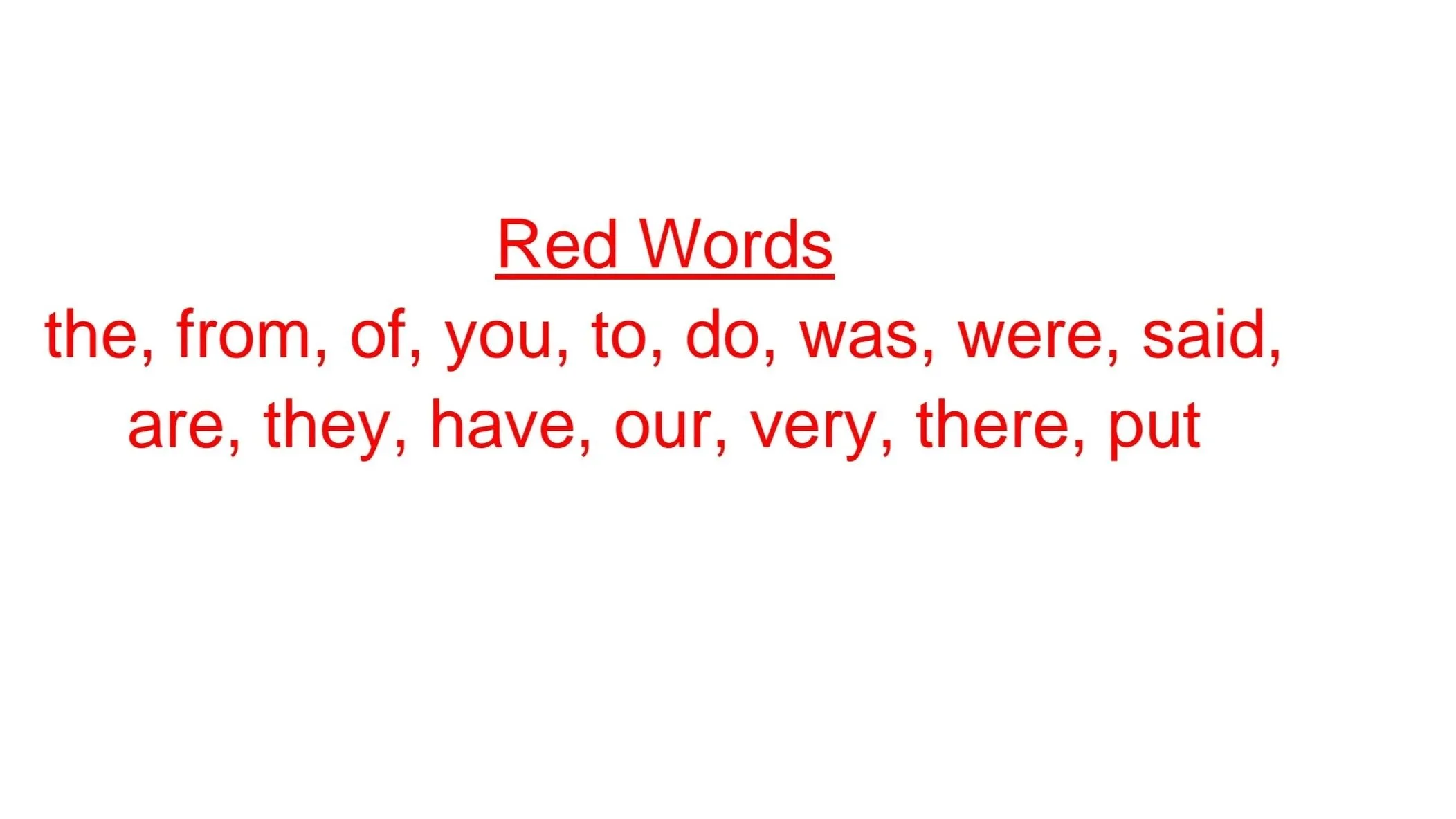
Red Words
Red words cannot be sounded out and need to be memorized. These are examples of red words for early readres.
Here are examples of a couple of sentences to present to an early reader:
The cat is fat.
The cat sat on the hat.
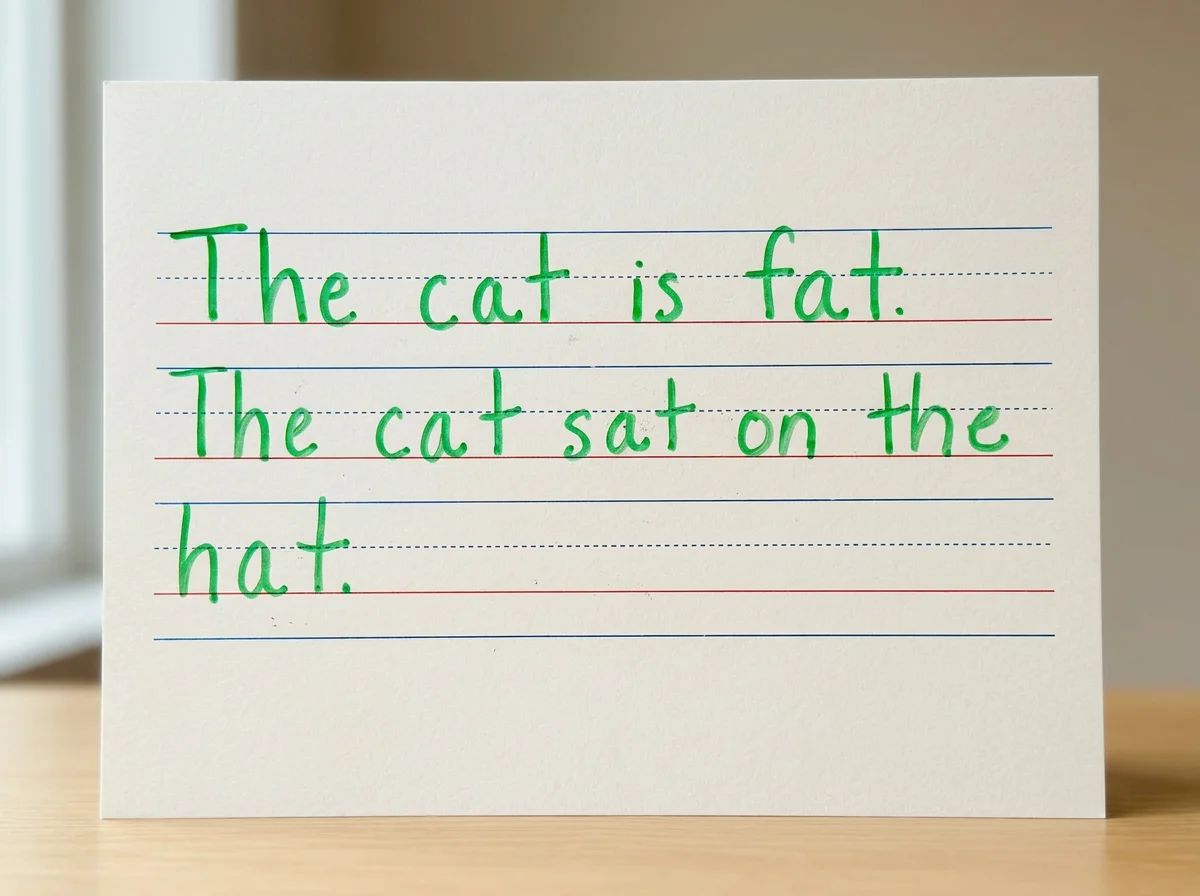
Decodable Sentences
These sentences feature decodable words, which are great for early readers.
Once your child can read sentences you write on the whiteboard, it’s time to move on to reading books! Check out our next blog post on how to choose and practice reading decodable texts.
How We Can Help
If this sounds like a lot to take on on your own, don’t worry, we are happy to help! Sign up for tutoring with Engaged Minds to work with an experienced reading.
